You know that feeling when you walk into a space so ancient and so alive that your whole body just… stops? That’s exactly what happens when you step foot inside a Kovil temple. Whether you’re a devout Hindu, a curious traveller, or just someone who appreciates jaw-dropping architecture, the sacred Kovil temples of South India and Sri Lanka are an experience that genuinely rewires something inside you.
I’ve been obsessed with temple travel for years, and honestly, no amount of blog posts or reels does these places justice. So let me walk you through the 10 most sacred Kovil temples in South India and Sri Lanka that absolutely deserve a spot on your travel list.
1. Meenakshi Amman Temple, Madurai, Tamil Nadu
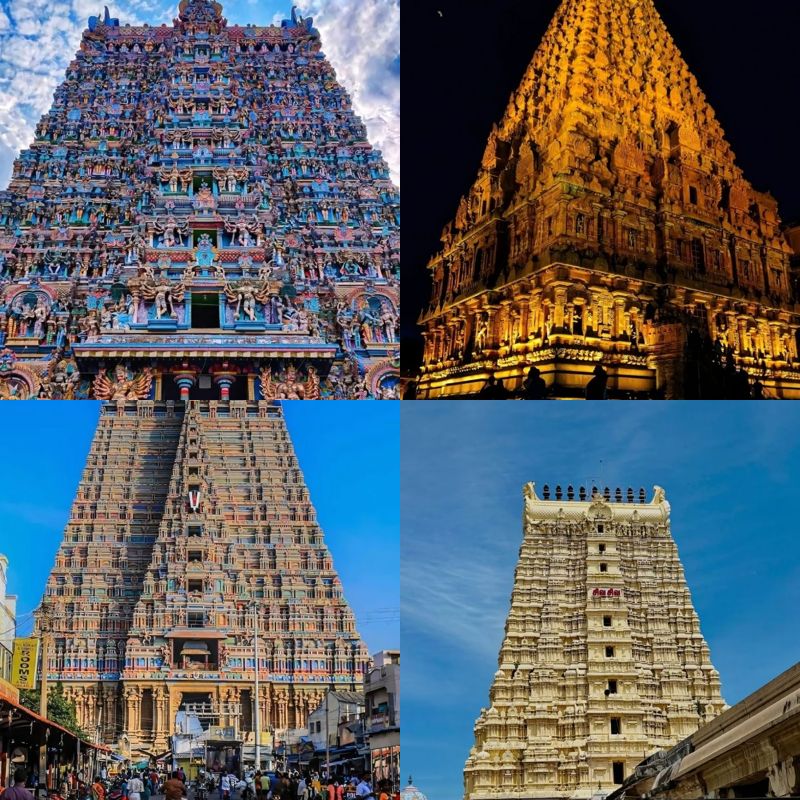
If you only visit one Kovil temple in your entire life, make it this one. The Meenakshi Amman Temple in Madurai stands on the banks of the Vaigai River and is one of the most iconic examples of Dravidian architecture on the planet. Its towering gopurams (ornate gateway towers) are covered in thousands of hand-sculpted figures, painted in vivid, almost psychedelic colours.
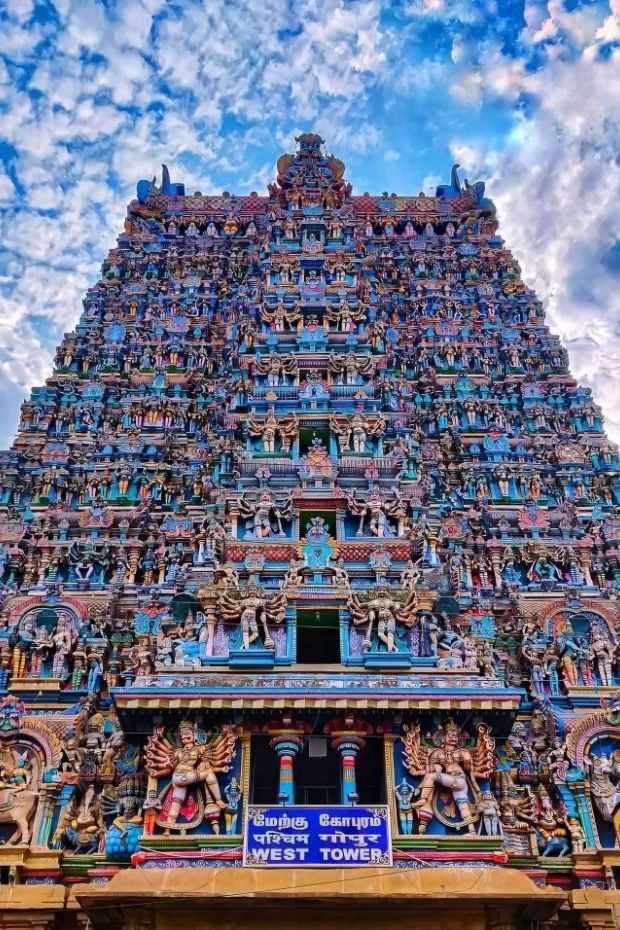
The temple is dedicated to Goddess Meenakshi (a form of Parvati) and Lord Sundareswarar (Shiva). The annual Meenakshi Thirukalyanam festival draws thousands of devotees from across the globe who gather to witness the divine wedding of Shiva and Meenakshi.
- Best time to visit: April to May during the Meenakshi Thirukalyanam festival
- Don’t miss: The Hall of a Thousand Pillars and the Golden Lotus Tank
- Dress code: Modest clothing; men must remove shirts before entering the inner sanctum
2. Brihadeeswarar Temple, Thanjavur, Tamil Nadu
A UNESCO World Heritage Site and a genuine architectural wonder, the Brihadeeswarar Temple was built over 1,000 years ago by the great Chola king Rajaraja I. The vimana (main tower) rises to a staggering height and holds the record as one of the tallest temple towers in the world. And somehow, the shadow of the tower never touches the ground at noon. Coincidence? IMO, the Chola engineers were just showing off.
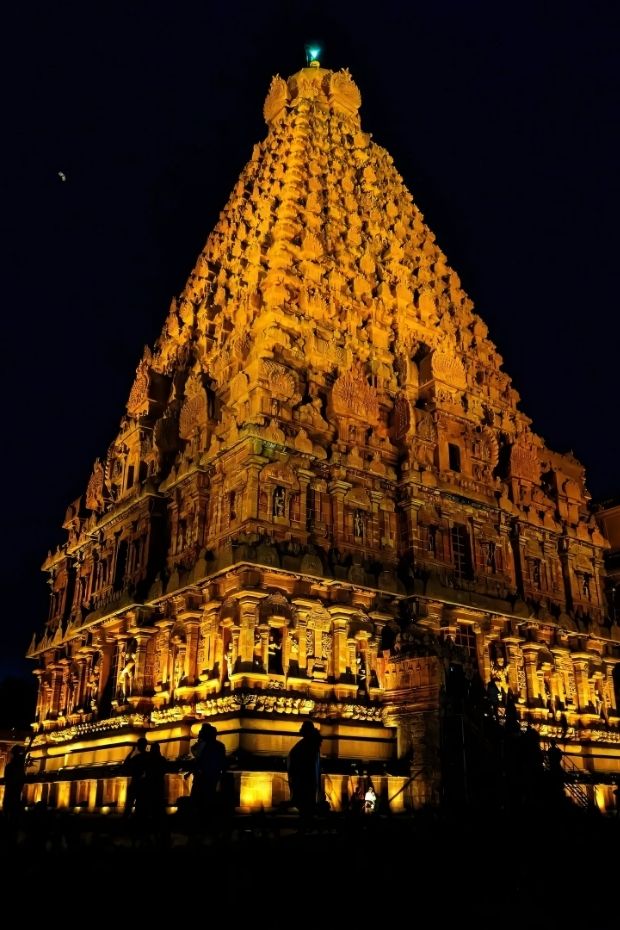
The temple is also known as Peruvudaiyar Kovil and is dedicated to Lord Shiva. The massive Nandi statue, intricate murals, and ancient inscriptions inside make this a must-visit for history lovers and spiritual seekers alike.
- Best time to visit: November to February for pleasant weather
- Special highlight: The shadowless vimana tower at midday is a sight you won’t forget
3. Sri Ranganathaswamy Temple, Srirangam, Tamil Nadu
When people say “big temple,” they don’t know what big means until they visit Sri Ranganathaswamy Temple in Srirangam. This is the largest functioning Hindu temple in the world, spread across 156 acres with 21 gopurams and seven enclosures. The temple is dedicated to Lord Ranganatha, a reclining form of Vishnu, which gives it an unusually serene energy compared to many other temples.
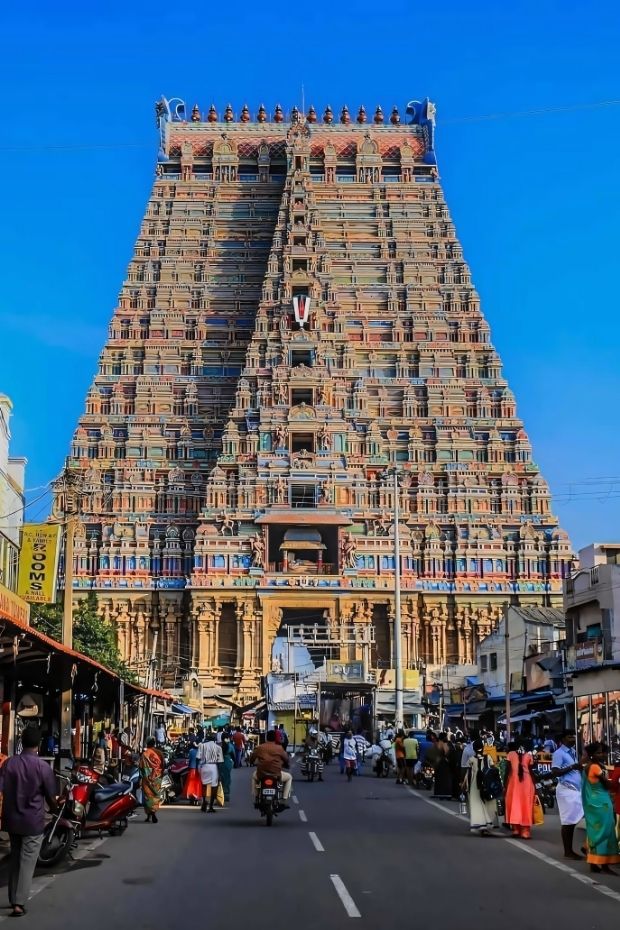
The outer enclosures function almost like a small town, with shops, residences, and open courtyards. The innermost sanctum, however, is pure sacred space. This is one of the 108 Divya Desams, the holiest Vishnu temples glorified in ancient Tamil texts.
- Best time to visit: December during the Vaikunta Ekadasi festival
- Visitor tip: Non-Hindus can explore the outer enclosures; some inner sections are restricted
4. Ramanathaswamy Temple, Rameswaram, Tamil Nadu
Have you ever visited a place connected to an epic so ancient it predates written history? Welcome to Ramanathaswamy Temple in Rameswaram. This is one of the 12 Jyotirlingas of Lord Shiva and also part of the Char Dham pilgrimage, which means it holds the highest tier of sacred status in Hinduism. According to legend, Lord Rama himself consecrated the Shiva Linga here after his battle with Ravana.
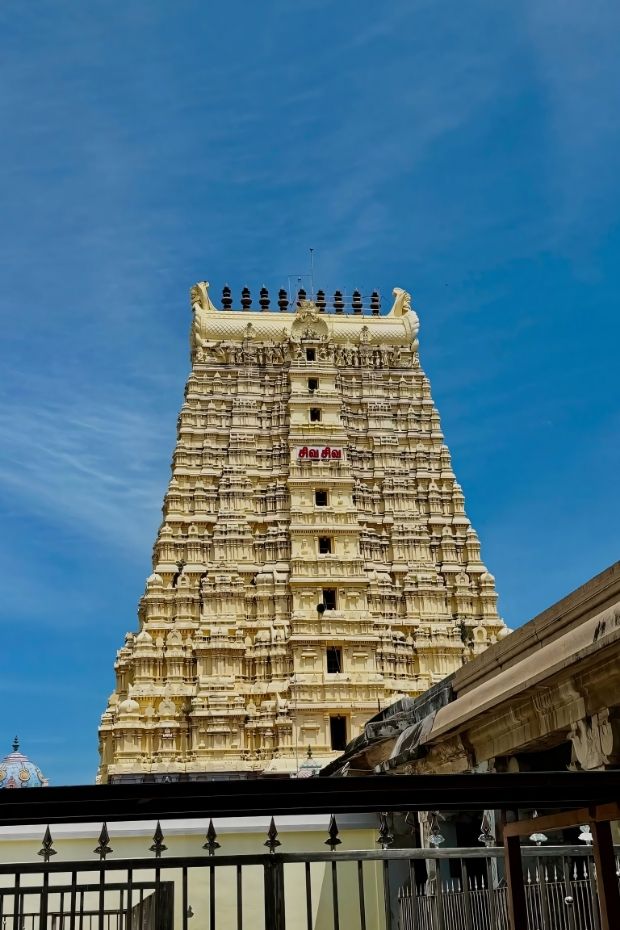
The temple features the longest temple corridor in the world, stretching over 1,200 metres with intricately carved pillars. The 22 sacred theerthams (holy water tanks) inside the complex are integral to the pilgrimage, and bathing in all 22 is believed to cleanse the soul of its sins.
- Best time to visit: Maha Shivaratri and Tamil month of Aadi
- Don’t miss: The sacred ritual of bathing in all 22 theerthams
5. Arunachalesvara Temple, Thiruvannamalai, Tamil Nadu
If fire had a temple, this would be it. The Arunachalesvara Temple in Thiruvannamalai is one of the Pancha Bhoota Sthalas, the five Shiva temples representing the five elements. This one represents fire (Agni), and the energy you feel here is intense in the best possible way. The presiding deity is Lord Arunachaleswarar, worshipped as the Agni Lingam.
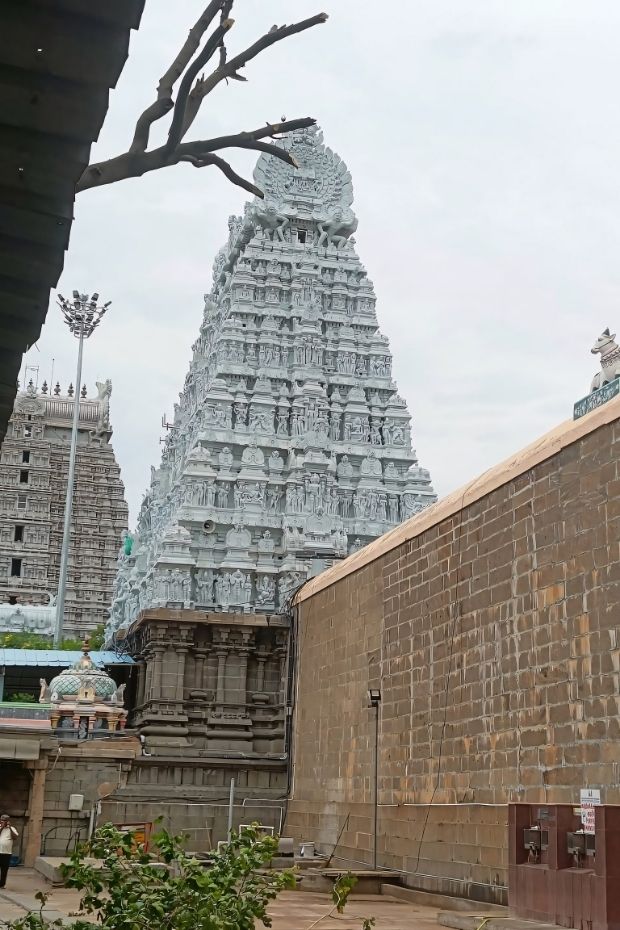
The sacred Arunachala Hill behind the temple is worshipped as Shiva himself. Devotees practice Girivalam, the ritual of walking barefoot around the 14-kilometre circumference of the hill, especially on full moon nights. The belief is profound: merely thinking of Arunachala is said to grant liberation.
- Best time to visit: Karthigai Deepam festival when a massive flame lights atop the hill
- Spiritual tip: Try the full moon Girivalam walk for a genuinely transformative experience
6. Shore Temple (Alaivay-k-Kovil), Mahabalipuram, Tamil Nadu
Standing right on the edge of the Bay of Bengal, the Shore Temple (locally called Alaivay-k-Kovil) is one of the oldest structural stone temples in South India, built in the 8th century during the Pallava dynasty. The sound of waves crashing just metres away as you walk through this ancient Kovil is a sensory experience that stays with you. The temple houses shrines dedicated to both Lord Shiva and Lord Vishnu, which is rare and speaks to the syncretic nature of early South Indian worship.
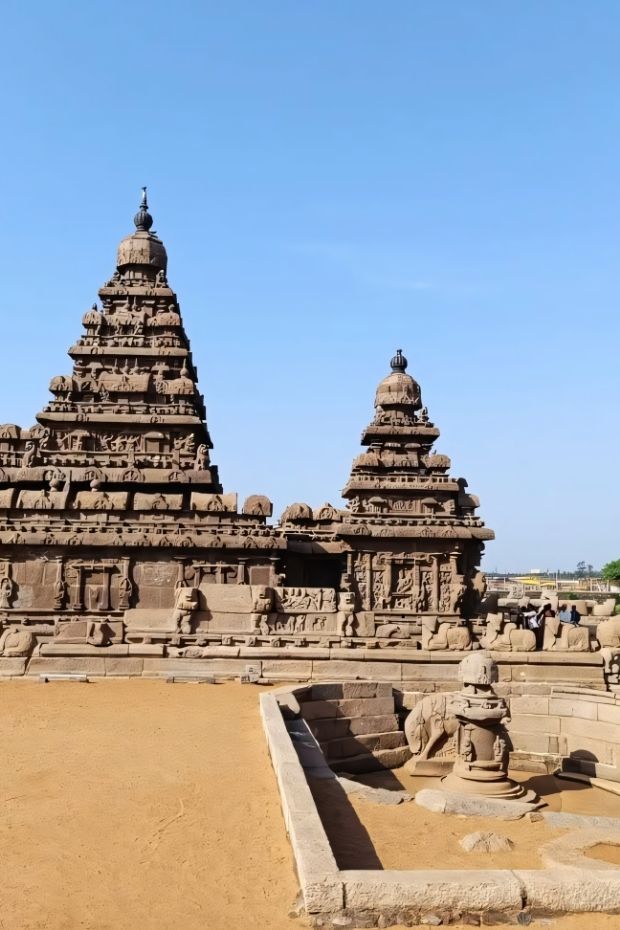
This is also a UNESCO World Heritage Site and part of the Group of Monuments at Mahabalipuram. The intricate wall carvings depicting Vishnu’s and Shiva’s stories are remarkably well-preserved for a structure that has faced centuries of sea wind and salt air.
- Best time to visit: November to February for cooler temperatures
- Visitor tip: Arrive at sunrise for golden hour photos against the ocean backdrop
7. Guruvayur Sri Krishna Temple, Kerala
They call it the “Dwarka of South India” and honestly, the title fits. The Guruvayur Sri Krishna Temple in Thrissur, Kerala is one of the holiest Hindu temples in India and is dedicated to Lord Krishna (Vishnu). Devotees believe the idol was created by Brahma himself and worshipped by Vasudeva, Lord Krishna’s father. FYI, non-Hindus are not permitted inside, which makes it even more special for those who do enter.
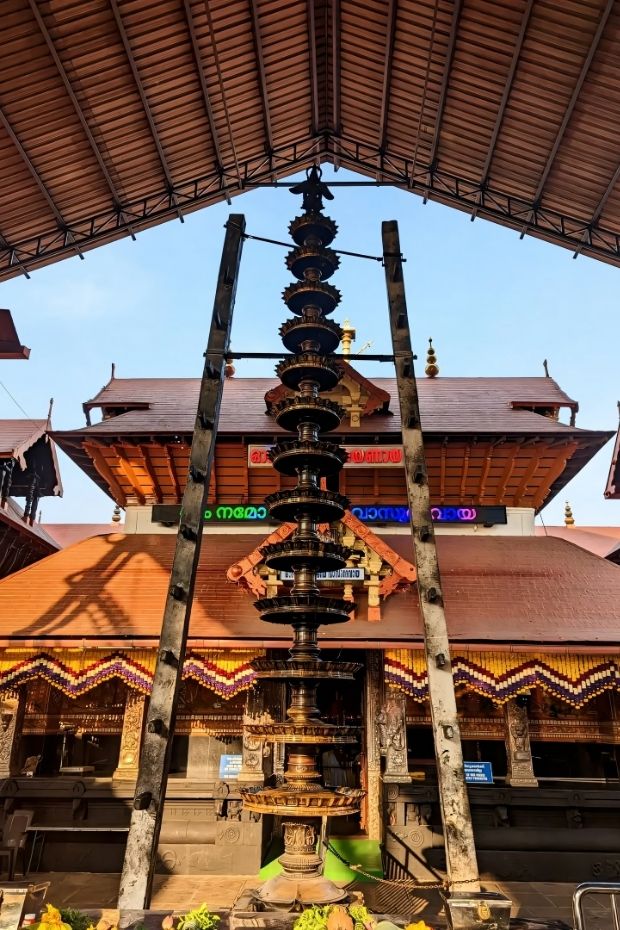
The temple follows a strict schedule of eight daily poojas and remains one of the most disciplined temple routines in South India. The famous elephant procession (featuring the temple’s dedicated herd of elephants) during the Utsavam festival is a spectacle unlike anything else in the region.
- Best time to visit: Guruvayur Ekadasi festival in November or December
- Special note: Only Hindus are allowed entry into the inner sanctum
8. Nallur Kandaswamy Kovil, Jaffna, Sri Lanka
Cross over to Sri Lanka and the first Kovil you absolutely must visit is the Nallur Kandaswamy Kovil in Jaffna. Dating back to 948 CE, this temple is the spiritual heart of Tamil Hindu identity in Sri Lanka. It was destroyed by Portuguese colonial forces in 1624, rebuilt in 1734, and today stands stronger than ever, a living symbol of resilience. The five-storey Dravidian-style gopuram is a visual masterpiece.
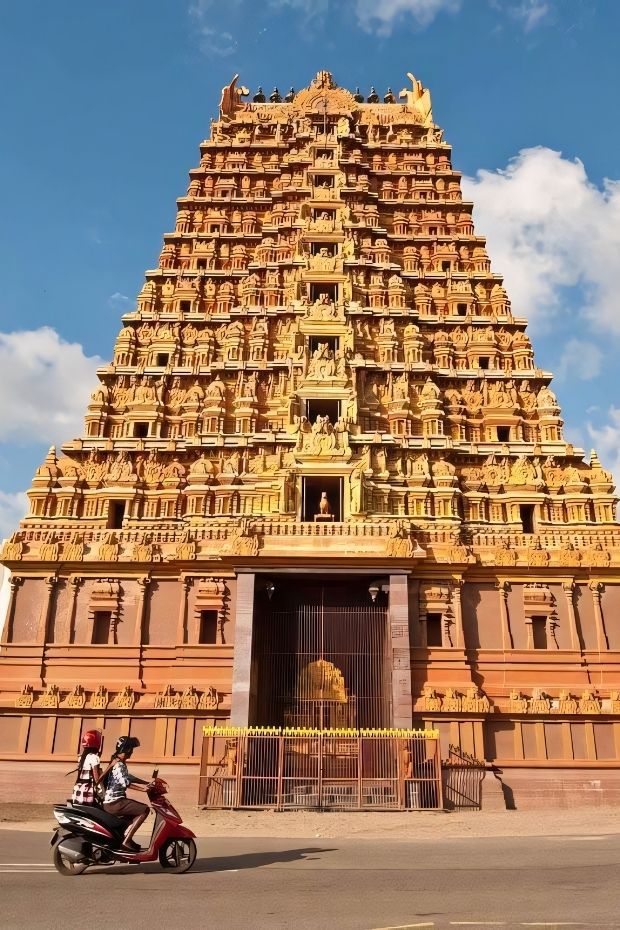
The temple is dedicated to Lord Murugan (Kandaswamy), the God of War and Victory. The annual 25-day Nallur festival attracts hundreds of thousands of devotees and is one of the largest Hindu festivals in all of Sri Lanka. The energy during this period is electric 🙂
- Best time to visit: July to August during the Nallur festival season
- Dress code: Men must enter bare-chested; wrap a sarong around your waist
- Don’t miss: The chariot procession (Ther) on the final festival day
9. Koneswaram Kovil, Trincomalee, Sri Lanka
Perched dramatically on Swami Rock, a cliff overlooking the Indian Ocean in Trincomalee, the Koneswaram Kovil is often called the “Temple of a Thousand Pillars.” It is one of the five ancient Pancha Ishwaram temples of Sri Lanka, all dedicated to Lord Shiva. The temple’s history is ancient and stormy (literally), with references to it found in classical Tamil literature going back thousands of years.
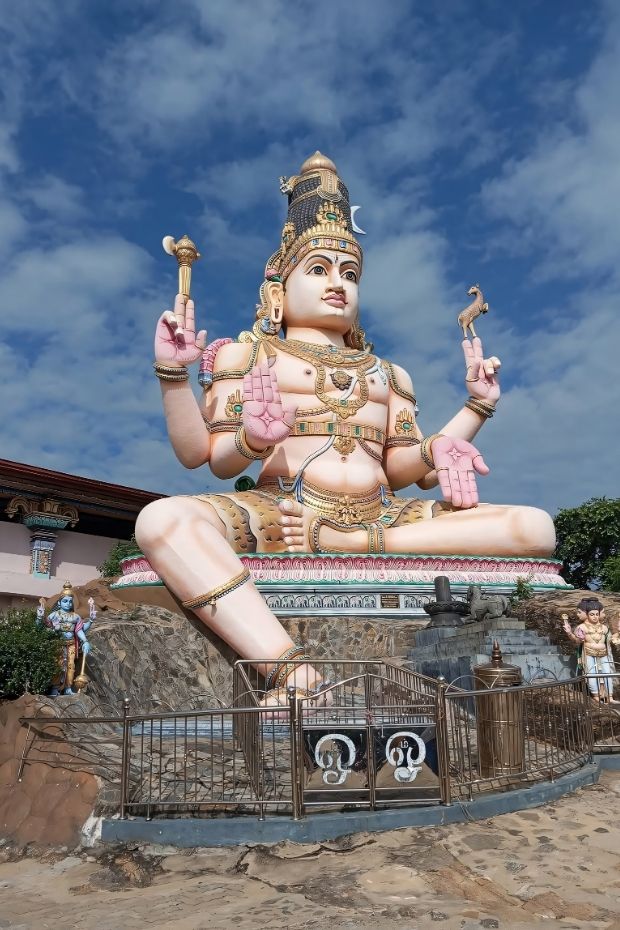
Like Nallur Kovil, this temple also faced colonial destruction at the hands of the Portuguese, who demolished much of it in 1624. The current structure was restored and today draws both pilgrims and tourists who come for the stunning coastal views as much as the spiritual atmosphere. Watching the sunset from Swami Rock with the temple behind you? That’s a moment worth the whole trip.
- Best time to visit: Maha Shivaratri and the annual Trincomalee festival
- Highlight: Spectacular Indian Ocean views from the clifftop temple grounds
10. Munneswaram Kovil, Chilaw, Sri Lanka
Last but absolutely not least is the Munneswaram Kovil in Chilaw, one of the oldest and most prestigious Hindu temples in Sri Lanka. The complex is actually a group of five temples, including a Buddhist shrine, which speaks beautifully to Sri Lanka’s multi-faith heritage. The main temple is dedicated to Lord Shiva and is said to have been consecrated by Lord Rama himself during his return journey from Lanka.
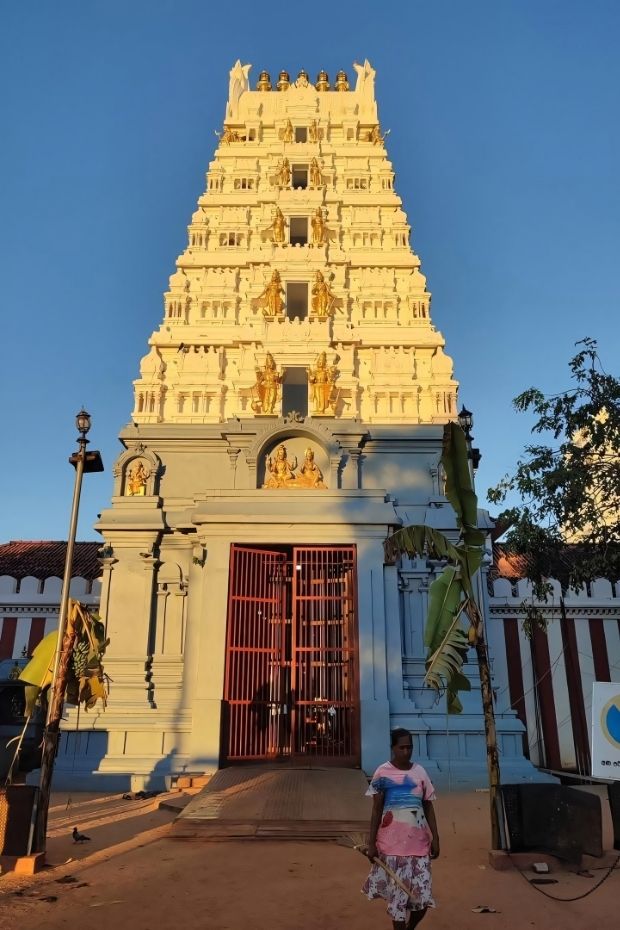
The annual Munneswaram Kali festival is famous across the island for its fire-walking ceremonies that draw devotees in the thousands. The atmosphere during festival season shifts from serene to intensely devotional in the best possible way. It’s raw, it’s real, and it leaves a mark on you long after you’ve left.
- Best time to visit: August to September during the annual festival
- Special feature: Fire-walking ceremonies are a once-in-a-lifetime spectacle
- Visitor tip: Arrive early on festival days as crowds build up quickly
Final Thoughts: Which Kovil Should You Visit First?
Honestly, the answer depends on what you’re looking for. If you want architectural grandeur, start with Brihadeeswarar or Meenakshi Amman. If you crave a raw spiritual experience, Arunachalesvara or Koneswaram will shake your soul. And if you want to understand Tamil cultural identity across borders, Nallur Kandaswamy Kovil in Jaffna is an absolute must.
These 10 sacred Kovil temples are not just tourist attractions. They are living, breathing centres of devotion, culture, and history that have survived invaders, centuries, and the test of time. Every stone, every carving, and every chant inside these spaces carries a story older than most nations. So the real question is: what are you waiting for? Pack your bags, wrap that sarong, and go discover something truly timeless 🙂